
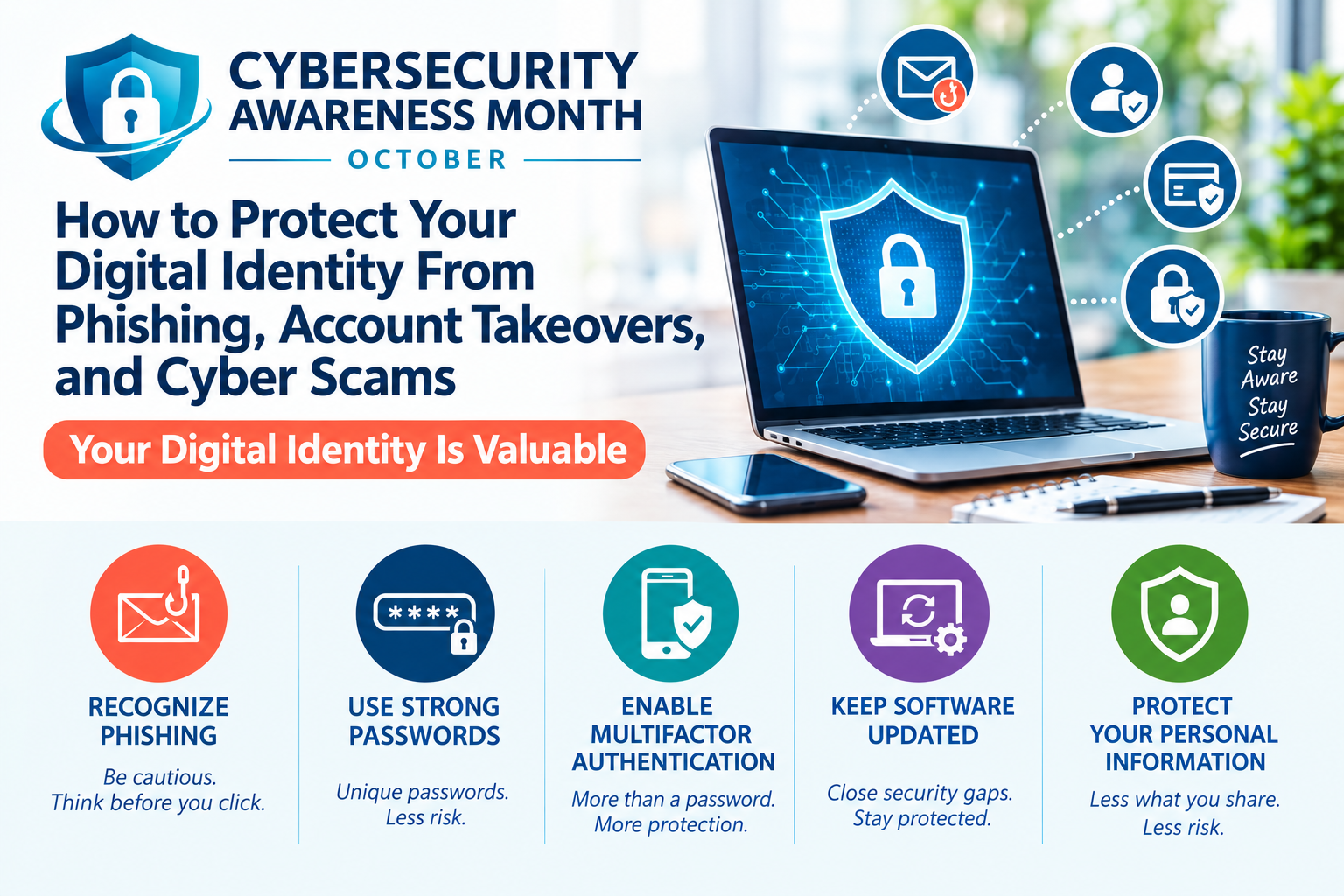
URS Cybersecurity Awareness Month: Part 2
Introduction: Your Digital Identity Is Valuable
Every day, we use digital accounts to communicate, work, shop, manage finances, and access sensitive information.
Our email accounts, social media profiles, banking applications, and business systems contain information that cybercriminals may attempt to steal or misuse.
A compromised account can create consequences that extend far beyond a single login.
For individuals, it may lead to financial fraud, identity theft, or loss of personal information.
For businesses, a compromised employee account can provide attackers with access to confidential information, customer records, financial systems, or other business resources.
The Cybersecurity and Infrastructure Security Agency (CISA) recommends four foundational cybersecurity practices: recognizing and reporting phishing, using strong passwords, enabling multifactor authentication, and updating software.
Let's explore how these practices can help protect your digital identity.
1. Phishing: Don't Trust Every Message You Receive
Phishing is a form of social engineering in which attackers attempt to trick people into revealing sensitive information, clicking malicious links, or opening harmful attachments.
Phishing messages may arrive through:
Email.
Text messages (smishing).
Phone calls (vishing).
Social media messages.
Fake websites and login pages.
QR codes that redirect users to malicious websites.
What Does a Phishing Attempt Look Like?
Imagine receiving an email that appears to come from your bank:
"Your account has been temporarily suspended. Click here to verify your information immediately."
The message may contain a convincing logo, professional language, and a link that looks legitimate.
However, the website may be designed to steal your login credentials.
Before clicking a link or providing information:
Check the sender's email address carefully.
Be cautious of unexpected urgency.
Avoid opening unexpected attachments.
Navigate to the official website independently.
Report suspicious messages through your organization's procedures.
Remember: A familiar logo or professional-looking email does not prove that a message is legitimate.
2. Password Security: One Password Should Not Unlock Everything
Reusing passwords across multiple accounts creates unnecessary risk.
If one website experiences a data breach, attackers may attempt to use the exposed credentials to access other accounts.
This is known as credential stuffing.
CISA recommends strong, unique passwords and password managers as practical ways to protect accounts.
Businesses should establish clear password requirements and encourage employees to use approved password management tools.
For individuals:
Use unique passwords for important accounts.
Avoid predictable passwords.
Use a reputable password manager.
Never share credentials unnecessarily.
Change compromised passwords promptly.
A password manager can help reduce the burden of remembering multiple unique passwords.
3. Multifactor Authentication: Add Another Layer of Protection
Multifactor authentication requires users to verify their identity using more than one type of authentication factor.
For example, a user may enter a password and then approve a login using an authenticator application or security key.
MFA can help protect accounts even when passwords are compromised.
Businesses should prioritize MFA for:
Email accounts.
Remote access.
Cloud applications.
Financial systems.
Administrative accounts.
Where supported, phishing-resistant MFA methods provide stronger protection against certain credential theft techniques.
Employees should also be trained to recognize unexpected authentication requests.
If you receive an MFA prompt that you did not initiate, do not approve it.
Report the activity to your IT or security team.
4. Business Email Compromise: Verify Before You Pay
Business Email Compromise (BEC) is a scam in which attackers compromise or impersonate legitimate email accounts to deceive businesses or individuals into transferring funds or sharing sensitive information.
The FBI's Internet Crime Complaint Center (IC3) identifies BEC as a significant fraud scheme involving compromised business email accounts, social engineering, and unauthorized financial transfers.
A common example involves a fraudulent request to change a vendor's banking information.
The email may appear to come from a trusted supplier and may reference a legitimate invoice.
The business transfers the payment, only to discover that the bank account belonged to a criminal.
How Businesses Can Reduce BEC Risk
Verify payment changes using a trusted, separate communication channel.
Establish approval procedures for financial transactions.
Train employees to recognize unusual requests.
Avoid relying solely on email for payment authorization.
Review financial transactions for suspicious activity.
A simple phone call to a known, verified contact can help prevent a costly mistake.
5. Protect Your Personal Information
Cybercriminals may use information found online to create convincing scams.
Publicly available information about your workplace, family, location, or professional responsibilities can make targeted messages more believable.
Individuals and businesses should consider:
Limiting unnecessary personal information shared online.
Reviewing privacy settings on social media accounts.
Avoiding public disclosure of sensitive business information.
Being cautious about unexpected requests for personal data.
Protecting financial and identity-related documents.
Digital identity protection is not limited to passwords.
It also involves understanding what information is available and how it could be misused.
How URS Helps Businesses Protect Digital Identities
At Ultimate Risk Services, we help organizations understand cybersecurity risks associated with people, processes, and technology.
URS can support businesses through:
Vulnerability assessments and mini penetration testing.
Risk identification and prioritization.
Customized cybersecurity policies.
Employee awareness training.
Compliance documentation and reporting.
Recommendations for addressing identified risks.
Our assessments and training help businesses identify weaknesses and strengthen their cybersecurity practices.
Technical remediation is performed by the organization's internal IT team or MSP.
Final Thoughts
Your digital identity is one of your most valuable assets.
Whether you are protecting a personal account or managing access to sensitive business information, the fundamentals remain important.
Use unique passwords. Enable MFA. Recognize phishing. Verify financial requests. Report suspicious activity.
Cybersecurity awareness is not about becoming suspicious of everything.
It is about developing the habits that help you recognize when something is not right.
Stay tuned for Part 3: Cybersecurity Is a Business Risk — How NIST Helps Organizations Identify and Manage Cybersecurity Risks.
Ready to see where your company defenses stand?
👉 Request your customized cyber vulnerability report today and stay ahead of threats.
👉 Gain insights into your unique cybersecurity vulnerabilities with a custom report.
👉 Train your team to be your first line of defense
📞 Schedule a call today or 📧 contact us for a consultation.