
URS Cybersecurity Awareness Month: Part 3
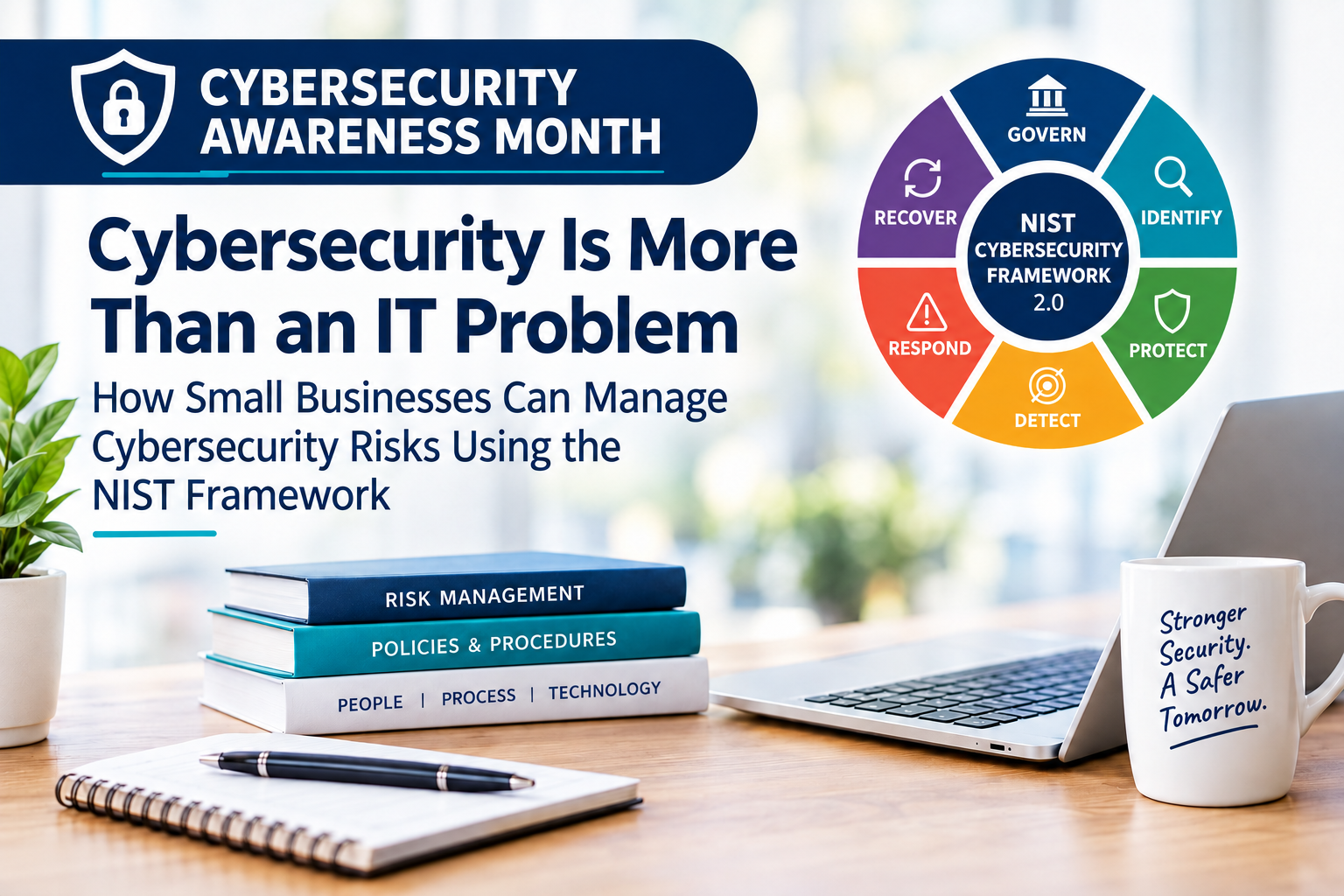
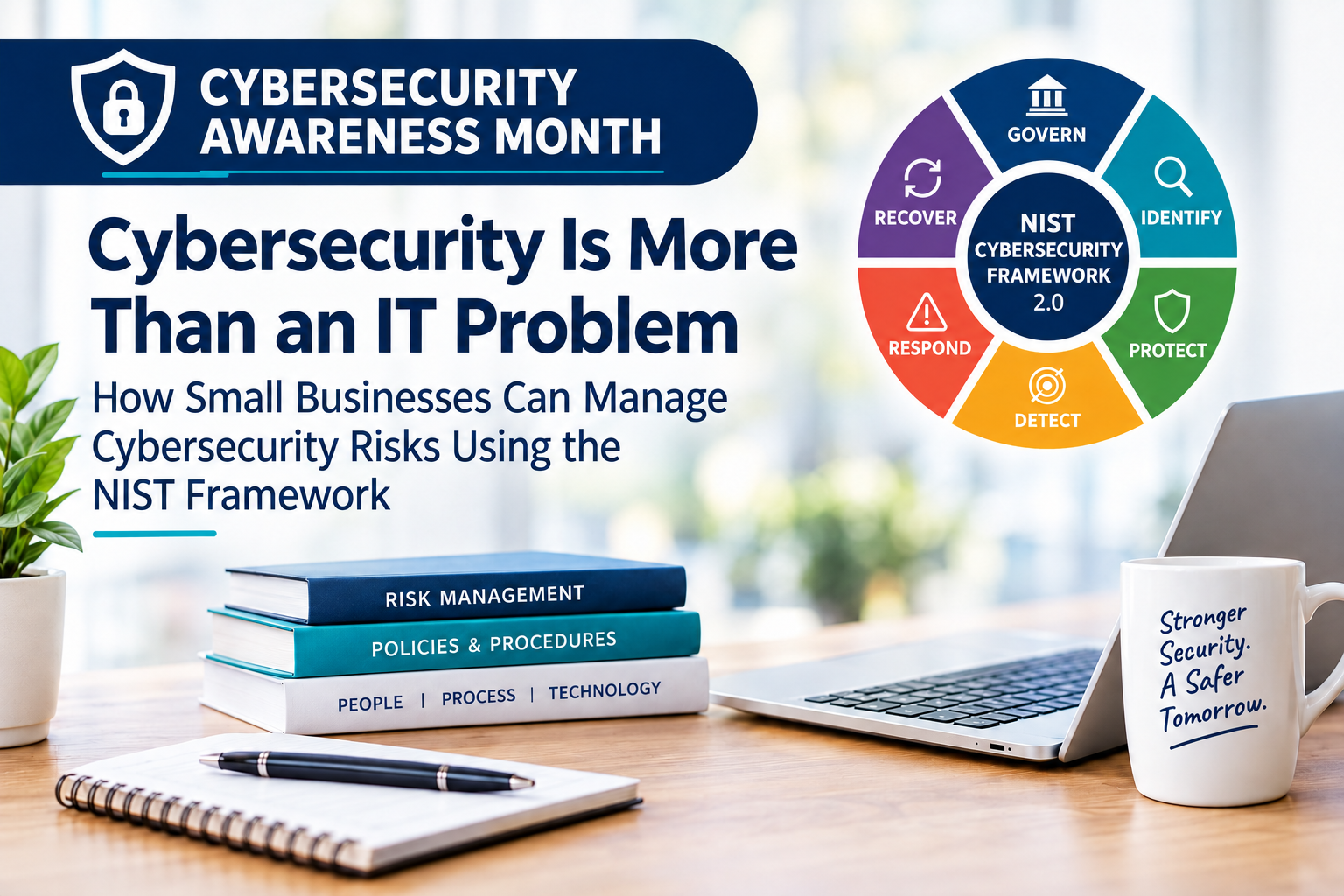
Cybersecurity Is More Than an IT Problem
Many business owners think cybersecurity is simply about installing antivirus software, purchasing a firewall, or hiring an IT provider.
While these measures are important, cybersecurity involves much more than technology.
It is a business risk that can affect operations, finances, customer trust, regulatory compliance, and long-term growth.
A business may have excellent technology but still face cybersecurity risks because of inadequate policies, excessive user access, outdated procedures, or a lack of employee awareness.
The National Institute of Standards and Technology (NIST) developed the Cybersecurity Framework (CSF) to help organizations understand, assess, prioritize, and manage cybersecurity risks.
NIST CSF 2.0 is organized around six core functions: Govern, Identify, Protect, Detect, Respond, and Recover.
These functions provide a structured approach that organizations can adapt to their size, resources, and risk profile.
1. Govern: Establish Cybersecurity Responsibilities
The Govern function helps organizations establish cybersecurity risk management priorities, responsibilities, and oversight.
Cybersecurity decisions should not be left entirely to technical personnel.
Business leadership should understand:
Which cybersecurity risks could affect operations.
Who is responsible for managing those risks.
Which policies and procedures are required.
How cybersecurity decisions are approved.
How risks are communicated to leadership.
For a small business, this may involve assigning cybersecurity responsibilities to an owner, operations manager, compliance lead, or IT provider.
The important point is that responsibilities should be clearly defined.
2. Identify: Understand What You Need to Protect
Organizations cannot effectively manage cybersecurity risks without understanding their assets.
The Identify function helps businesses understand their systems, data, users, vendors, and potential vulnerabilities.
Start by identifying:
Business Assets
Computers, servers, applications, cloud systems, mobile devices, and network equipment.
Sensitive Information
Customer records, employee information, financial data, healthcare information, payment card data, and contractual information.
Users and Access
Employees, contractors, vendors, administrators, and other individuals who access business systems.
Third-Party Providers
MSPs, cloud service providers, software vendors, payment processors, and other service providers.
Potential Risks
Outdated systems, weak authentication, excessive permissions, insecure configurations, missing policies, and inadequate employee training.
A documented inventory and risk assessment can help an organization determine which areas require attention.
3. Protect: Implement Appropriate Security Controls
Once an organization understands its risks, it can determine which safeguards are appropriate.
The Protect function focuses on reducing the likelihood and impact of cybersecurity incidents.
Common safeguards include:
Strong authentication and access controls.
Employee cybersecurity awareness training.
Data protection procedures.
Secure configurations.
Software updates and vulnerability management.
Appropriate backups.
Documented security policies.
Security controls should be selected based on the organization's risk exposure, business needs, and applicable requirements.
For example, a healthcare organization may need safeguards specifically designed to protect electronic protected health information.
A federal contractor may need to address requirements related to Controlled Unclassified Information.
A business that processes payment cards may need to consider PCI DSS requirements.
4. Detect: Identify Suspicious Activity
Prevention is important, but it cannot guarantee that every attack will be stopped.
The Detect function focuses on identifying potential cybersecurity incidents.
Businesses should consider how they will identify:
Suspicious login activity.
Unusual account behavior.
Unexpected system changes.
Malware infections.
Unauthorized access.
Potential data exfiltration.
Detection capabilities may include security logs, endpoint monitoring, alerting, and other security technologies.
Small businesses should work with their IT or security providers to understand which activities are monitored and how alerts are handled.
5. Respond: Know What to Do When an Incident Occurs
When a cybersecurity incident occurs, confusion can increase its impact.
The Respond function focuses on taking appropriate action to contain and manage an incident.
Organizations should establish procedures for:
Reporting suspected incidents.
Identifying responsible personnel.
Contacting IT and security providers.
Preserving relevant evidence.
Communicating with leadership.
Determining whether legal or regulatory reporting obligations apply.
Incident response planning should be documented and reviewed periodically.
6. Recover: Restore Business Operations
Cybersecurity does not end when an incident is contained.
Businesses must also consider how they will restore operations.
The Recover function focuses on restoring affected systems and services and improving resilience after an incident.
Recovery planning should address:
Backup availability.
Restoration procedures.
Business continuity.
Critical systems and priorities.
Recovery responsibilities.
Lessons learned.
Organizations should periodically test their recovery procedures rather than assuming that backups will always work as expected.
Why Risk Assessments Matter
A cybersecurity risk assessment helps an organization understand its current security posture and identify areas requiring improvement.
It can help answer questions such as:
Which systems are most important to our business?
What vulnerabilities exist?
Which risks could cause the greatest disruption?
Are our safeguards appropriate?
Are we meeting applicable security requirements?
What should we prioritize next?
NIST's Small Business Quick-Start Guide provides an accessible starting point for organizations with limited or no existing cybersecurity plans.
A risk assessment should not be treated as a one-time activity.
Business operations, technology, threats, and regulatory requirements change over time.
Organizations should review their risks periodically and when significant changes occur.
How URS Helps Businesses Manage Cybersecurity Risks
Ultimate Risk Services helps organizations identify cybersecurity risks and develop a structured approach to improving their security and compliance posture.
Our services can include:
External and Internal Vulnerability Assessments
Identify potential weaknesses affecting business systems and networks.
Mini Penetration Testing
Evaluate selected security controls through controlled testing activities.
Risk Prioritization
Help organizations understand findings and prioritize appropriate remediation.
Policies and Procedures
Develop and review customized cybersecurity documentation.
Employee Training
Support security awareness and employee responsibilities.
Compliance Support
Help organizations understand applicable requirements and maintain relevant documentation.
URS provides assessment findings and recommendations. The organization's IT team or MSP is responsible for implementing technical remediation.
Final Thoughts
Cybersecurity should be managed as an ongoing business risk—not simply a technology expense.
The NIST Cybersecurity Framework provides a practical structure for understanding and improving cybersecurity practices.
By establishing responsibilities, identifying assets, implementing safeguards, monitoring systems, preparing for incidents, and planning for recovery, organizations can build a more resilient cybersecurity program.
Cybersecurity maturity begins with understanding your risks.
Stay tuned for Part 4: Cybersecurity and Compliance — What HIPAA, PCI DSS, and CMMC Require Businesses to Understand.
Ready to see where your company defenses stand?
👉 Request your customized cyber vulnerability report today and stay ahead of threats.
👉 Gain insights into your unique cybersecurity vulnerabilities with a custom report.
👉 Train your team to be your first line of defense
📞 Schedule a call today or 📧 contact us for a consultation.