
Many people assume Apple devices are automatically secure.
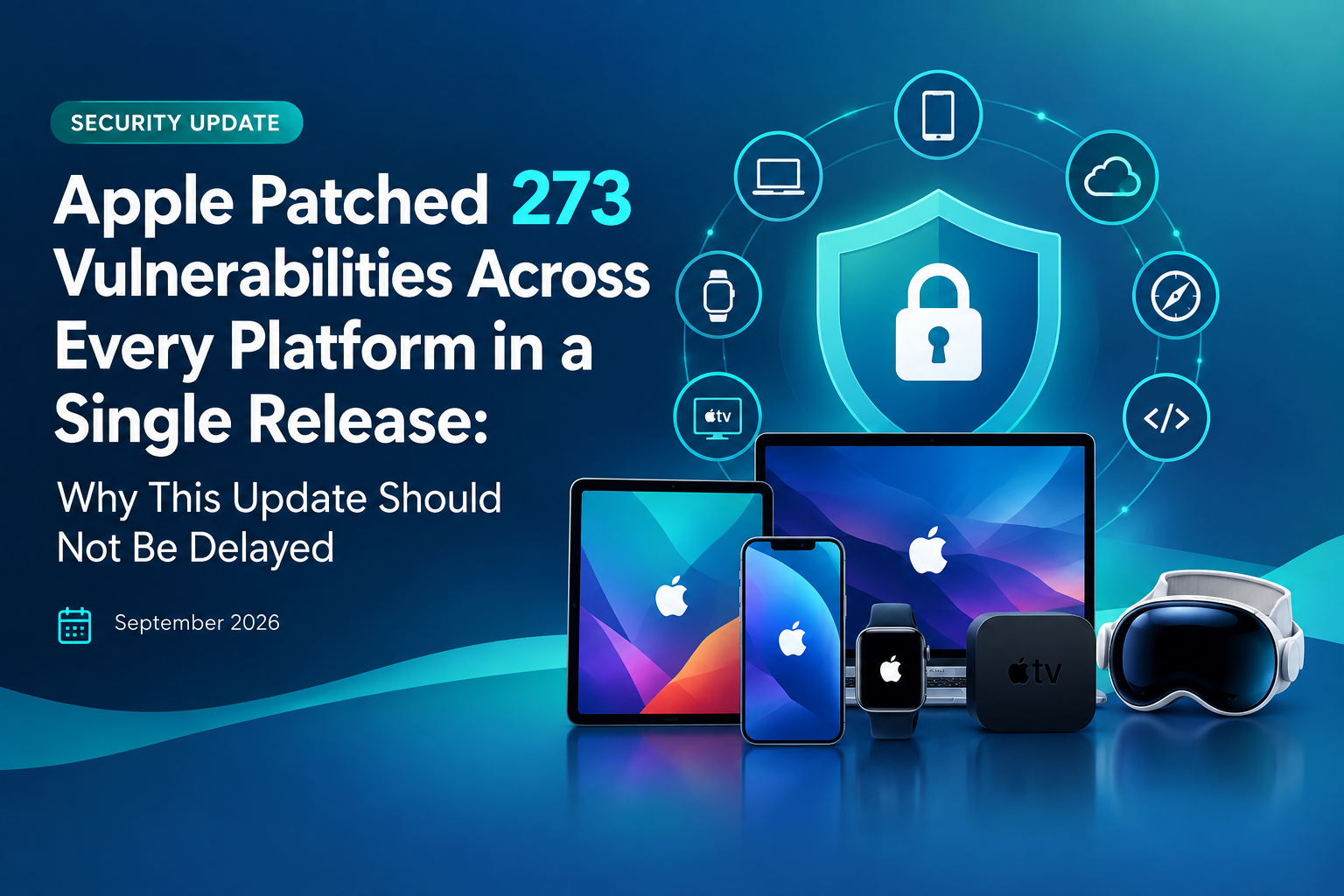
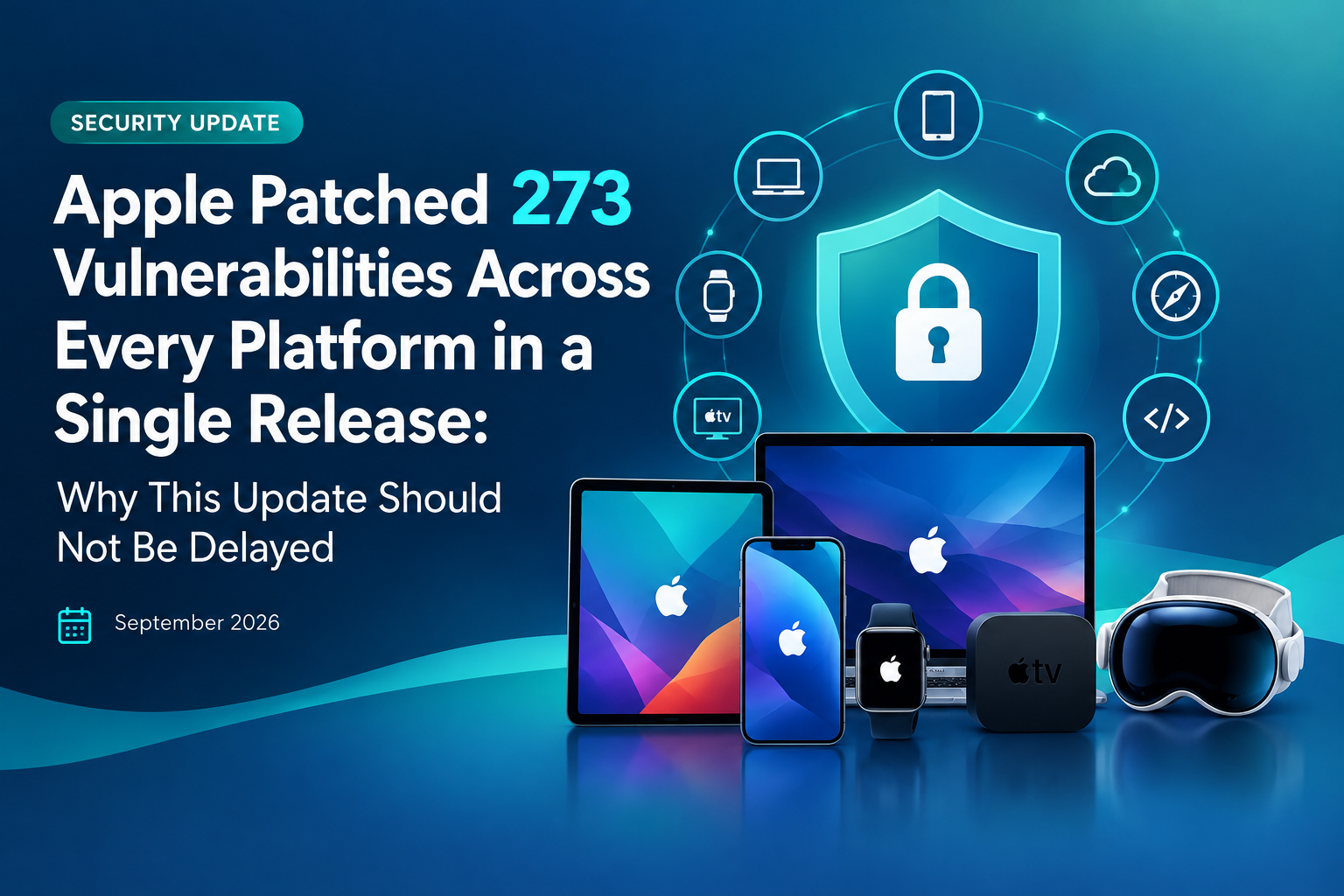
While Apple has a strong security reputation, no technology is immune to vulnerabilities. In fact, Apple recently released one of the largest security updates in its history, fixing 273 security vulnerabilities across iPhones, iPads, Macs, Apple Watches, Apple TVs, Vision Pro devices, Safari, and Xcode.
The update affects virtually every Apple platform and highlights an important reality:
Cybersecurity is not about which device you use. It's about how quickly you respond when security issues are discovered.
What Does This Actually Mean?
Think of a vulnerability as a weakness in a lock.
Most of the time, these weaknesses are unknown to attackers. Once a software vendor discovers them, they release an update to fix the problem before criminals can take advantage of it.
In this case, Apple found and fixed 273 different weaknesses across its products. Some of these vulnerabilities could potentially allow attackers to:
Access sensitive information
Cause devices to crash
Bypass security protections
Gain higher levels of access to a device
Execute malicious code under certain circumstances
The good news is that Apple released patches to address these issues.
The challenge is that the protection only works after the updates are installed.
Why This Matters for Businesses
Many organizations now rely heavily on Apple devices.
Executives use iPhones for email and banking. Employees access company files from MacBooks. Sales teams use iPads in the field. Remote workers often use personal Apple devices to connect to business systems.
When security updates are delayed, those devices can become an entry point into the organization.
Cybercriminals do not care whether a company uses Windows, Apple, or Linux. They look for unpatched systems.
The Compliance Lesson Most Organizations Miss
From a compliance perspective, this story is not really about Apple.
It is about patch management.
Most cybersecurity and privacy frameworks require organizations to identify, assess, and address security vulnerabilities in a timely manner.
Examples include:
CMMC
NIST SP 800-171
NIST Cybersecurity Framework
HIPAA Security Rule
PCI DSS
ISO 27001
These frameworks do not require perfection.
They do require organizations to demonstrate that they have a process for:
Monitoring security updates
Applying patches
Verifying installation
Documenting remediation efforts
In other words:
The compliance issue is not that vulnerabilities exist. The compliance issue is failing to address them after a fix becomes available.
Why Documentation Matters
Many organizations assume their IT provider or device management platform automatically handles updates.
Unfortunately, assumptions do not satisfy auditors, regulators, cyber insurers, or legal investigators after an incident.
If a breach occurs, organizations may be asked:
Were security updates available?
When were they released?
When were they applied?
Can you prove they were installed?
Being able to answer those questions can make a significant difference during:
Compliance assessments
Cyber insurance claims
Customer security reviews
Regulatory investigations
Legal proceedings
This is why patch verification and documentation are critical parts of a mature compliance program.
A Common Mistake: Trusting the Dashboard
Organizations that manage Apple devices through Mobile Device Management (MDM) solutions often rely on compliance dashboards to show update status.
While these tools are valuable, reporting can occasionally lag behind actual device installation status.
A best practice is to periodically verify that updates were successfully installed rather than assuming every device reported correctly.
Compliance is about evidence, not assumptions.
What Organizations Should Do Now
If your organization uses Apple devices:
✔ Update all supported Apple devices.
✔ Verify that updates were successfully installed.
✔ Review MDM reporting for accuracy.
✔ Document patch deployment activities.
✔ Include patch verification as part of your compliance program.
✔ Maintain records that demonstrate due diligence.
Bottom Line
Apple's recent update fixing 273 vulnerabilities is a reminder that cybersecurity is an ongoing process, not a one-time project.
For compliance professionals, the key takeaway is simple:
Vulnerabilities are inevitable. Failing to patch them—and failing to document that you patched them—is where compliance risk begins.
Organizations that consistently monitor, apply, verify, and document security updates are not only reducing cyber risk—they are also strengthening their ability to demonstrate compliance when auditors, customers, insurers, or regulators come asking.
Ready to see where your company defenses stand?
👉 Request your customized cyber vulnerability report today and stay ahead of threats.
👉 Gain insights into your unique cybersecurity vulnerabilities with a custom report.
👉 Train your team to be your first line of defense
📞 Schedule a call today or 📧 contact us for a consultation.