Protecting your website is more than keeping your software running. It is about protecting your business, customer information, and compliance responsibilities.
PHP is one of the most widely used programming languages for websites and web applications. It powers platforms, business portals, e-commerce websites, and content management systems that organizations rely on every day.
However, vulnerabilities in PHP can create significant cybersecurity risks—especially for SMBs that depend on third-party website developers, hosting providers, or managed IT service providers (MSPs).
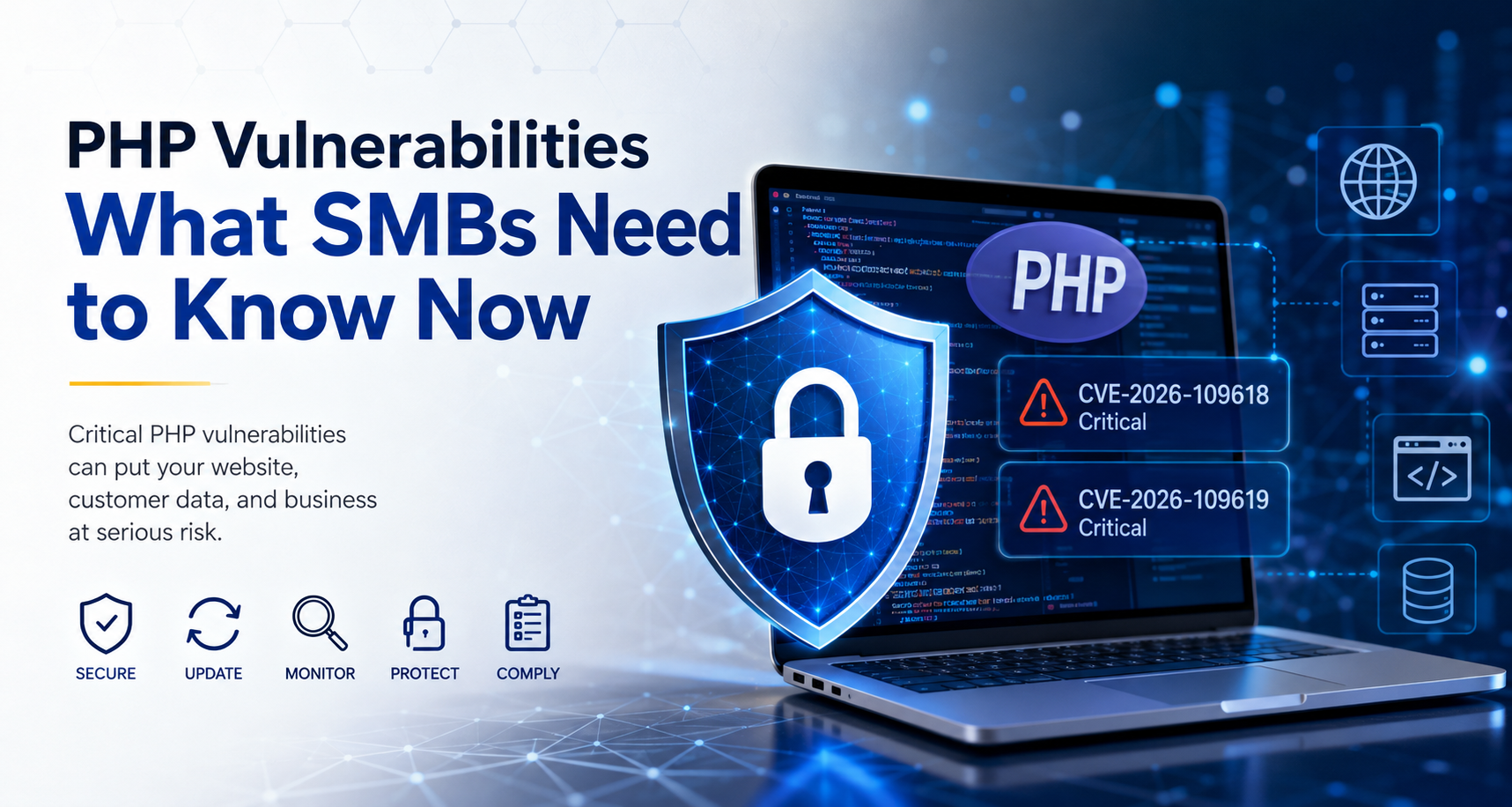
In October 2026, two critical PHP vulnerabilities, identified as CVE-2026-109618 and CVE-2026-109619, brought renewed attention to the importance of timely security updates. These vulnerabilities could allow attackers to execute malicious code on affected servers without authentication.
For SMBs, the message is clear: keeping your website, applications, and underlying technology updated is a business security responsibility—not just an IT task.