
When Your Cybersecurity Claims Become Legal Risks: The New Era of Federal Enforcement
For years, cybersecurity in the world of federal contracting was a bit like a "check-the-box" compliance exercise. You had your requirements, you did your audits, and if there were gaps, you fixed them over time. Falling short was a headache, but it wasn't exactly an existential threat.
That era is officially over.
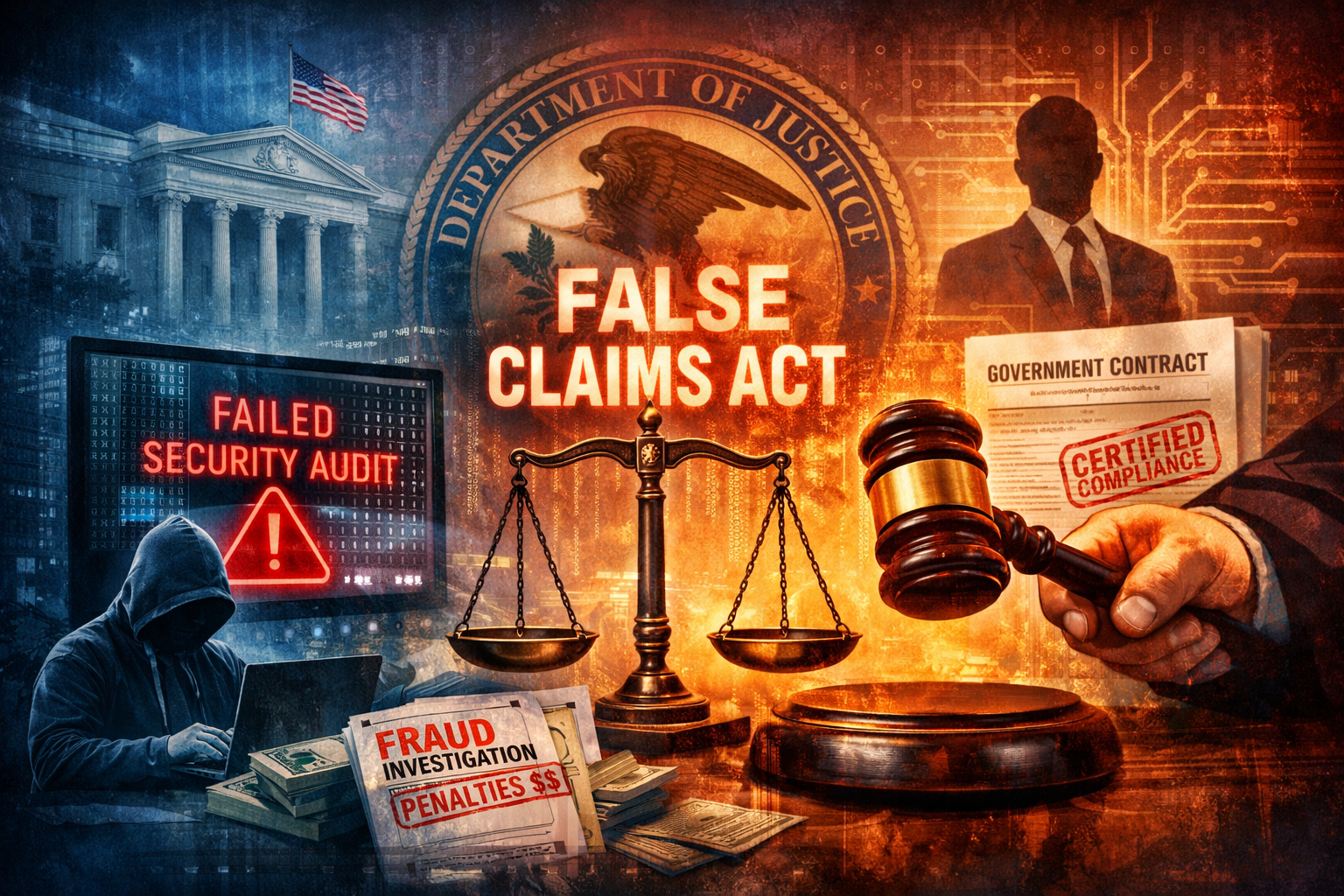
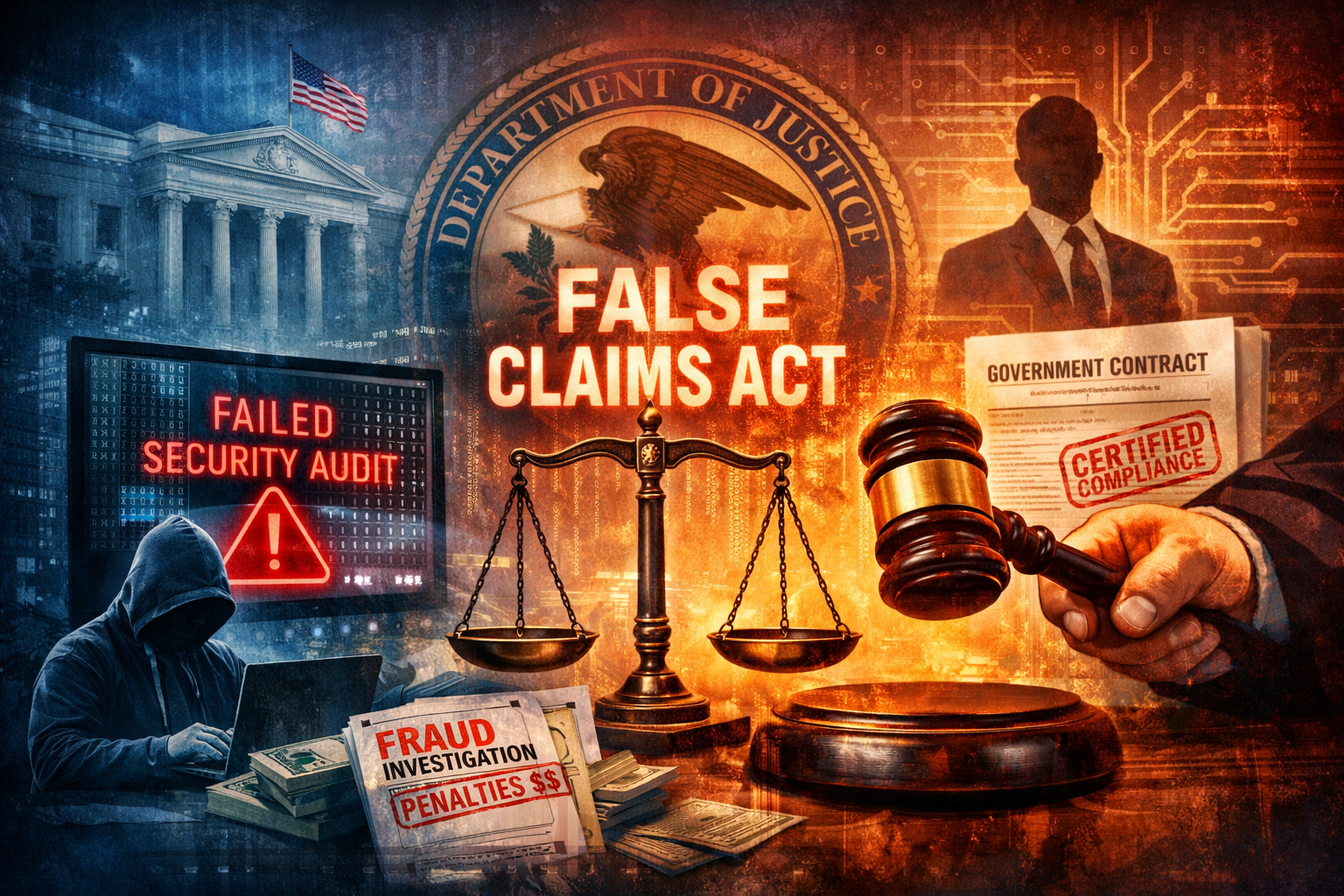
The Department of Justice (DOJ) is now using one of its most formidable legal hammers—the False Claims Act (FSA)—to police cybersecurity. This shift, formalized through the DOJ’s Civil Cyber-Fraud Initiative, means the government is no longer just looking at whether your firewalls are up; they are looking at whether you lied about them being up.
From "Paperwork" to "Pay Up": How the FSA Applies
The False Claims Act was originally designed to stop old-school fraud against the government. It punishes organizations that knowingly submit false claims for payment.
In the modern landscape, a "false claim" now includes misrepresenting your security posture. If you tell a federal agency you meet specific standards (like those in NIST SP 800-171) to win a contract, but your actual security is full of holes, you aren't just failing an audit—you’re potentially committing fraud.
The Cost of a "Material Inaccuracy"
The stakes are high. We’re talking about treble damages (three times the actual loss) plus statutory penalties that add up per claim. Recent headlines show the DOJ isn't bluffing:
Morsecorp: Settled for $4.6 million after allegedly overstating its cybersecurity controls.
Penn State: Agreed to a $1.25 million settlement regarding allegations of misrepresented timelines and missing controls across federal contracts.
The common thread? The government didn't just find "deficiencies"; they found a gap between representation and reality.
Why the Heat is Turning Up Now
Several factors are creating a "perfect storm" for enforcement:
Traceable Records: With the rollout of the Cybersecurity Maturity Model Certification (CMMC), contractors must now submit scores into the Supplier Performance Risk System (SPRS) and provide senior-level affirmations of compliance. This creates a "time-stamped" evidentiary trail for the DOJ to follow.
The "Whistleblower" Factor: The FSA’s qui tam provisions allow internal employees or consultants—the people who actually see the security gaps—to report fraud and share in the recovery.
Beyond Defense: This isn't just for weapons manufacturers anymore. The General Services Administration (GSA) is bringing these same rigorous standards to civilian agency procurement. If you sell to the government through a GSA schedule, you’re in the spotlight.
The New Golden Rule for Executives: Discipline in Representation
For CEOs and Board members, cybersecurity has migrated from the IT basement to the legal boardroom. Perfection isn't the requirement—honesty is.
"Cybersecurity can no longer be viewed solely as a technical or operational domain. It is now directly connected to legal and financial risk."
How to Stay Out of the DOJ's Crosshairs:
Verify, Don't Aspire: Ensure your certifications are grounded in verifiable evidence, not "aspirational" goals.
Bridge the Communication Gap: Your technical teams, legal counsel, and leadership must be in sync. If the IT team knows a control is missing, the executive signing the affirmation needs to know it, too.
Use Documentation Strategically: Internal assessments should be tools for real decision-making, not just "compliance artifacts" to be filed away.
The bottom line? The DOJ is increasingly focused on the alignment between what you say and what you do. In the new world of federal procurement, a "compliance gap" is a mistake, but a "representation gap" is a liability.
For more information on the initiative, you can visit the Civil Cyber-Fraud Initiative page at DOJ.gov.
Ready to see where your company defenses stand?
👉 Request your customized cyber vulnerability report today and stay ahead of threats.
👉 Gain insights into your unique cybersecurity vulnerabilities with a custom report.
👉 Train your team to be your first line of defense
📞 Schedule a call today or 📧 contact us for a consultation.