
Source: Vector Choice - URS Preferred Partner
Why Most Cybersecurity Breaches Start With Overlooked Blind Spots
Most business leaders know cybersecurity matters. You’ve invested in antivirus software, firewalls, and backups. You may even have policies in place.
So why do breaches still happen?
Because the most dangerous cyber risks aren’t always dramatic or obvious. They’re quiet. Routine. Easy to overlook. And that’s exactly why hackers love them.
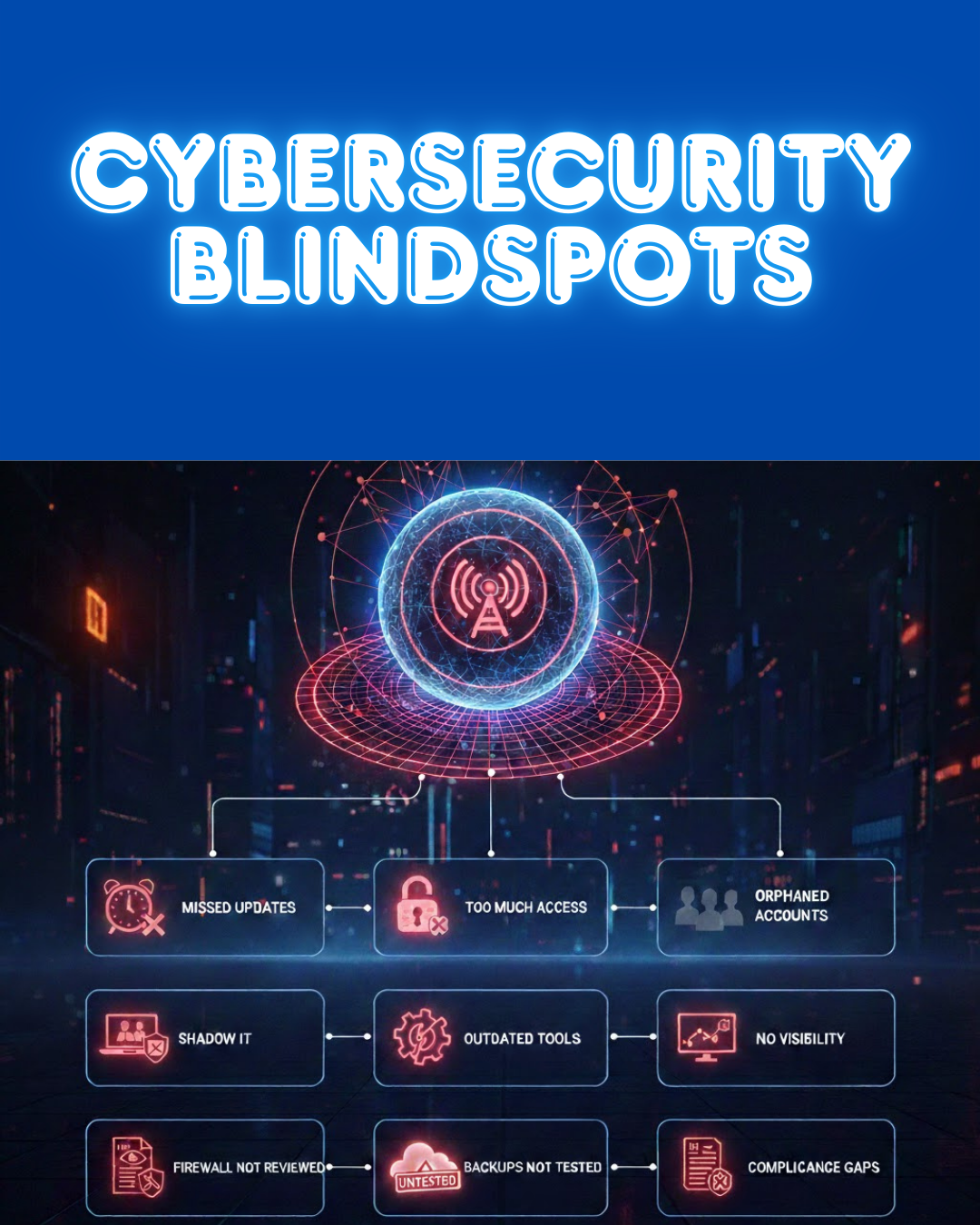
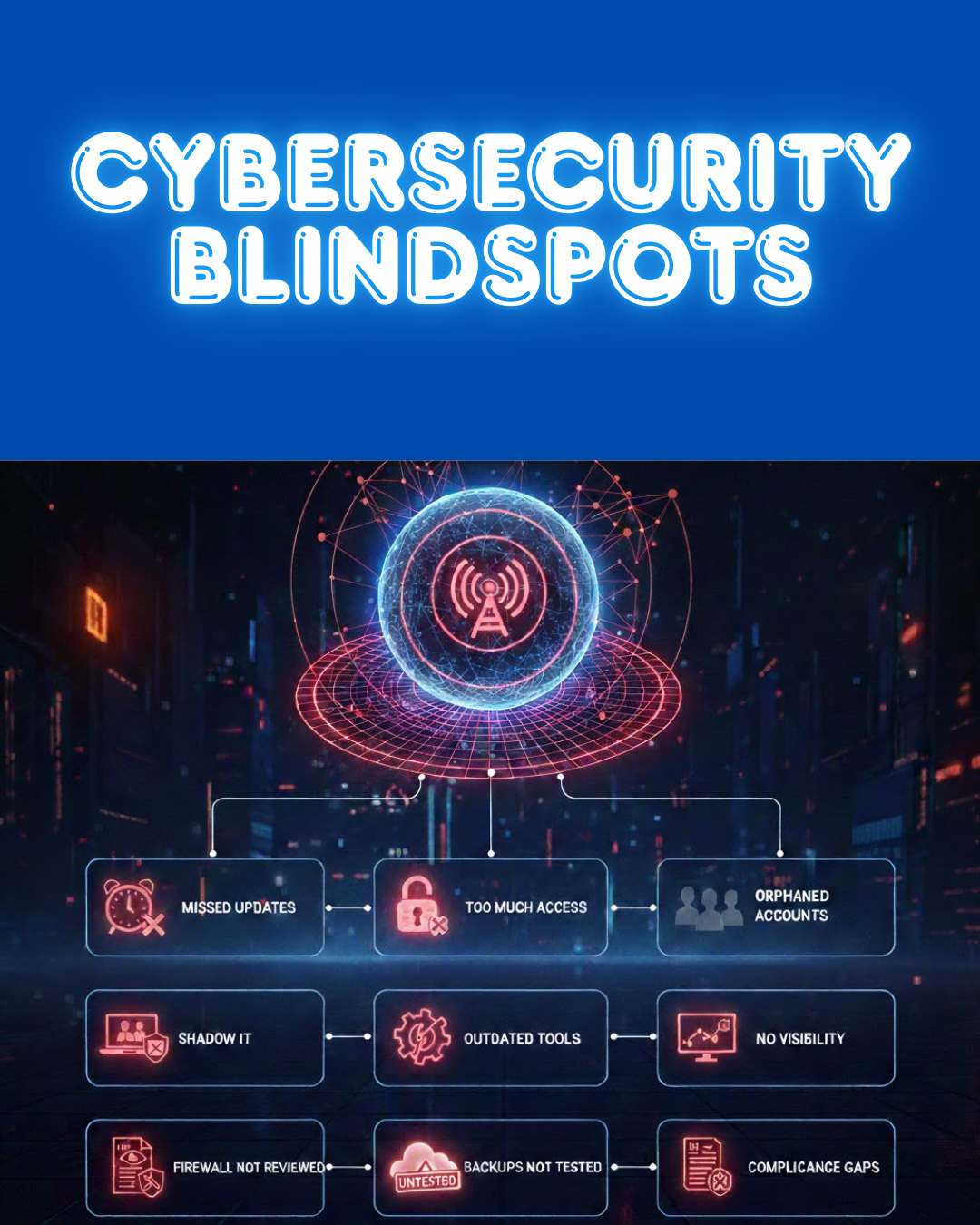
Cybercriminals rarely “break in” the way movies portray. Instead, they walk through doors that were accidentally left open—doors created by small gaps in everyday operations. These hidden weaknesses are called cybersecurity blind spots, and nearly every organization has them.
Let’s look at the most common ones—and how to close them before they turn into costly problems.
1. Missed Updates: Small Delays, Big Consequences
Software updates can feel inconvenient. They interrupt workflows and often get postponed.
But every missed update is a known weakness.
Hackers actively monitor newly discovered flaws in software. Once an update is released, attackers know exactly what was fixed—and they target systems that haven’t been patched yet.
How to reduce the risk:
Automate updates wherever possible and set alerts for systems that fall behind. Patching isn’t optional—it’s basic hygiene.
2. Shadow IT: Technology You Didn’t Approve
Employees often try to be helpful and efficient. They download apps, connect personal devices, or use free tools without realizing the risk.
Unfortunately, unauthorized software and devices can introduce malware or expose sensitive data—sometimes without triggering any warnings.
How to reduce the risk:
Create clear policies for approved apps and devices. Regularly scan your network to identify anything unfamiliar or unapproved.
3. Too Much Access in the Wrong Hands
Access equals power. And too much access is dangerous.
When employees have permissions they don’t actually need, a single stolen login can give attackers far more control than necessary.
This is one of the most common—and most exploited—security gaps.
How to reduce the risk:
Apply the principle of least privilege: users should only access what they need to do their job. Review permissions regularly and remove excess access.
4. Outdated Security Tools
Cyber threats evolve daily. Tools that were effective years ago may no longer recognize modern attacks.
Old antivirus software and legacy detection tools often provide a false sense of security.
How to reduce the risk:
Audit your security tools regularly. Replace outdated solutions before they fail—because by the time they fail, it’s already too late.
5. Orphaned Accounts: Access That Shouldn’t Exist
When employees leave, their system access should leave with them. But in many organizations, old accounts remain active for weeks, months, or even years.
To attackers, these forgotten accounts are gold.
How to reduce the risk:
Automate the offboarding process so accounts are disabled immediately when someone leaves. No exceptions.
6. Firewalls That Haven’t Been Reviewed
A firewall is only effective if it’s properly configured.
Temporary rules added during a project, emergency changes made years ago, or undocumented exceptions can quietly weaken your defenses over time.
How to reduce the risk:
Review firewall settings regularly. Document changes and remove rules that are no longer needed.
7. Backups That Were Never Tested
Many businesses believe they’re protected because they “have backups.”
But backups don’t help if they’re incomplete, corrupted, or impossible to restore.
Unfortunately, many organizations discover this only after an attack.
How to reduce the risk:
Test backups quarterly. Store them securely using immutable storage so they can’t be altered or deleted by attackers.
8. No Visibility Into What’s Happening
You can’t protect what you can’t see.
Without centralized monitoring, suspicious activity can go unnoticed for weeks—or longer—while damage quietly spreads.
How to reduce the risk:
Implement continuous security monitoring or partner with an experienced IT provider who can watch for threats around the clock.
9. Compliance Gaps That Create Real Risk
Regulatory frameworks like FTC Safeguards or HIPAA aren’t just paperwork. They’re built on real-world lessons from breaches.
Ignoring them often means ignoring proven security controls.
How to reduce the risk:
Conduct regular compliance reviews and keep documentation up to date. Compliance strengthens security when done correctly.
The Bottom Line
Cybersecurity failures rarely start with sophisticated hacks. They start with overlooked details.
Identifying blind spots is only the first step. Real protection comes from fixing them quickly and consistently.
When you close these gaps—patching systems, limiting access, monitoring activity, and testing backups—you strengthen your defenses where it matters most.
Hackers look for the easy way in.
Make sure your business isn’t providing it.
👉 Request your customized cyber vulnerability report today and stay ahead of threats.
👉 Gain insights into your unique cybersecurity vulnerabilities with a custom report.
👉 Train your team to be your first line of defense
📞 Schedule a call today or 📧 contact us for a consultation.