
URS Cybersecurity Awareness Month: Part 5
Awareness Is Only the Beginning
Throughout Cybersecurity Awareness Month, we have explored the importance of protecting digital identities, recognizing phishing, managing cybersecurity risks, and understanding compliance requirements.
But awareness alone is not enough.
Businesses must turn cybersecurity knowledge into practical action.
That means identifying risks, implementing safeguards, preparing for incidents, and continuously improving security practices.
Cybersecurity is not a one-time project.
It is an ongoing process that helps organizations protect their information, maintain operations, and build customer trust.
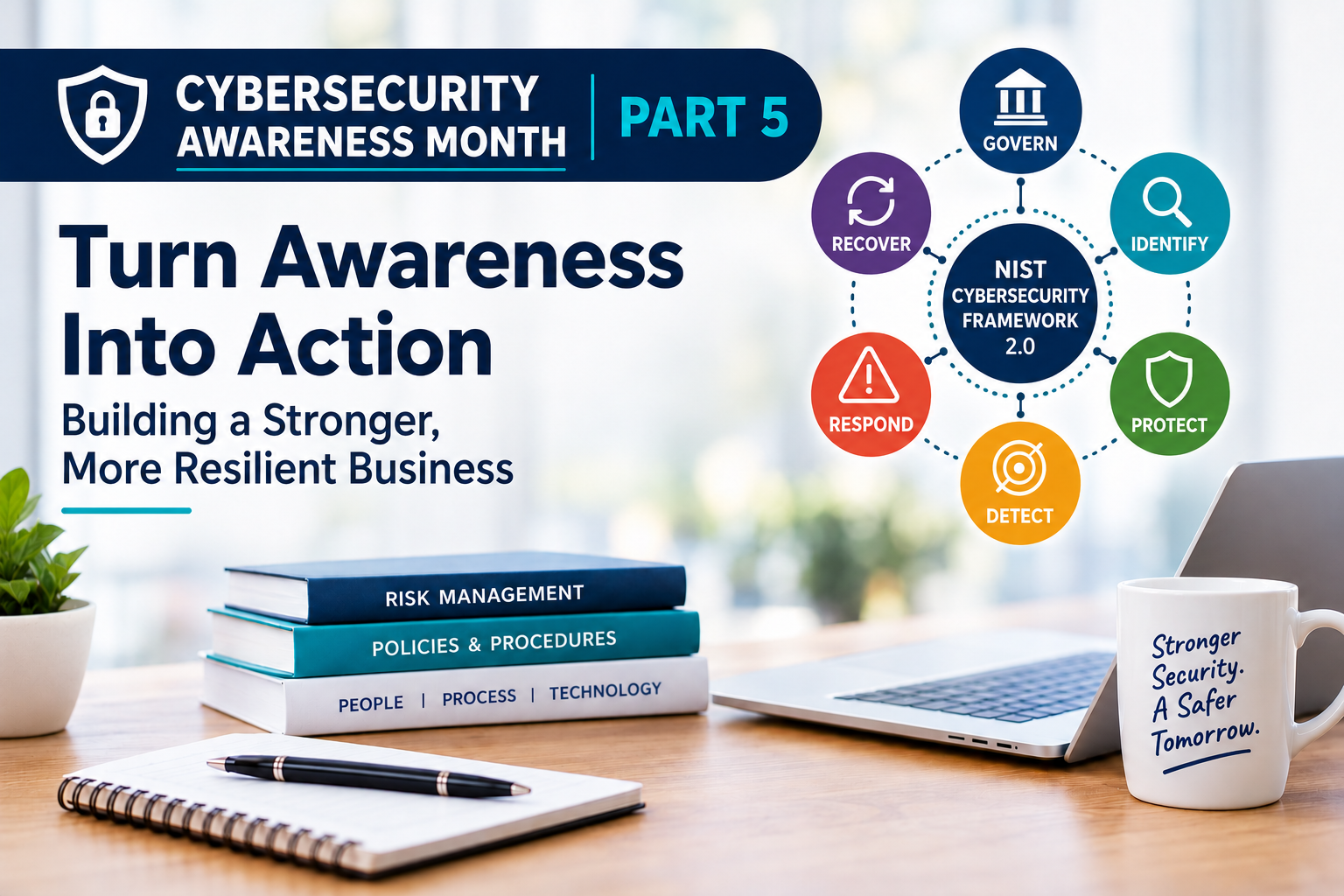
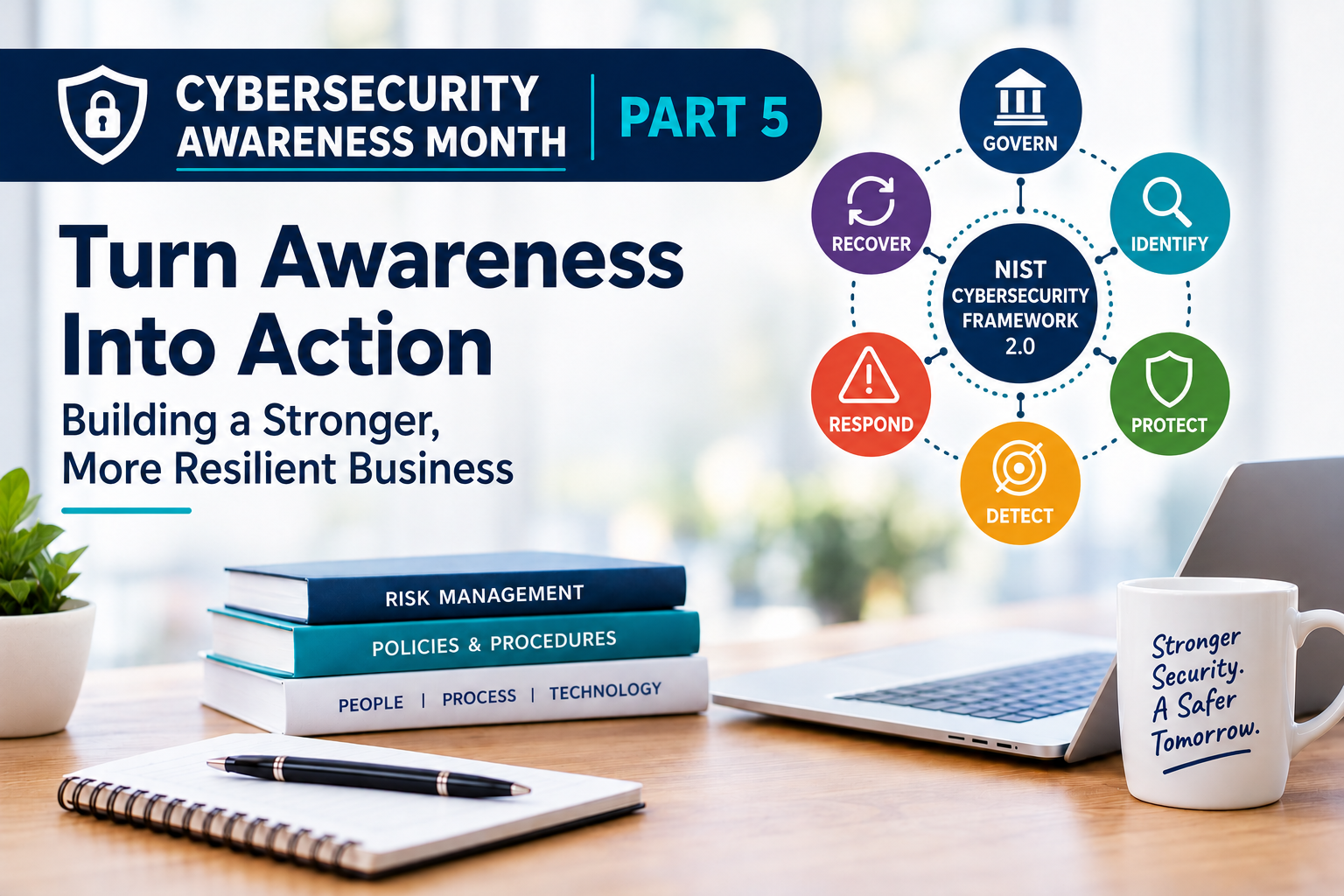
NIST's Cybersecurity Framework 2.0 provides a structured approach to managing cybersecurity risks through its six functions: Govern, Identify, Protect, Detect, Respond, and Recover.
Let's explore how businesses can move from awareness to action.
1. Start With a Clear Understanding of Your Cybersecurity Risks
The first step is understanding what your organization needs to protect.
Businesses should identify:
Critical business systems.
Sensitive information.
Employees and users with access.
Third-party service providers.
Existing security controls.
Potential vulnerabilities.
Applicable compliance requirements.
A cybersecurity risk assessment can help organizations identify weaknesses and determine which risks require attention.
Without a clear understanding of the current environment, security investments may be misdirected.
For example, a business may spend money on new security software while continuing to rely on weak authentication or outdated systems.
Risk assessments help organizations prioritize improvements based on their business needs and risk exposure.
2. Develop a Practical Cybersecurity Action Plan
Once risks have been identified, organizations should develop a plan for addressing them.
A cybersecurity action plan should include:
Identified Risk
What weakness or exposure was discovered?
Business Impact
How could the issue affect operations, information, or compliance?
Recommended Action
What should be done to address the risk?
Responsible Party
Who will implement the required changes?
Priority
How urgently should the issue be addressed?
Target Date
When should the action be completed?
Evidence
How will the organization demonstrate that the issue was addressed?
This approach helps businesses move from simply identifying vulnerabilities to managing them systematically.
3. Prepare for Cybersecurity Incidents
Even organizations with strong security controls may experience cybersecurity incidents.
Businesses should establish an incident response plan that explains how they will identify, report, manage, and recover from an incident.
A practical plan should address:
Incident identification and reporting.
Internal responsibilities.
IT and security provider contacts.
Incident containment.
Evidence preservation.
Internal and external communications.
Legal and regulatory considerations.
Recovery procedures.
Employees should understand how to report suspicious activity.
Leadership should understand who makes decisions during an incident.
IT and security providers should understand their responsibilities.
The plan should be reviewed periodically and updated when business operations or technology changes.
4. Test Your Backup and Recovery Procedures
Backups are an important part of cybersecurity resilience.
However, having backups does not automatically mean a business can recover successfully.
Organizations should understand:
Which systems and information are backed up.
How frequently backups occur.
Who is responsible for recovery.
Whether backups are protected from unauthorized access.
How long restoration may take.
Whether recovery procedures have been tested.
A backup that cannot be restored when needed may provide little practical value.
Businesses should periodically test their recovery procedures and ensure that critical information can be restored within acceptable timeframes.
5. Make Cybersecurity Awareness an Ongoing Practice
Cybersecurity threats and business environments continue to change.
Employees join and leave organizations. New applications are introduced. Business processes evolve.
New vulnerabilities emerge. Cybersecurity awareness should therefore be an ongoing activity.
Organizations should consider:
Regular employee awareness training.
Periodic phishing exercises.
Reviews of cybersecurity policies.
Access reviews.
Vulnerability assessments.
Incident response exercises.
Vendor risk reviews.
Periodic compliance evaluations.
Training should be relevant to employees' responsibilities and the risks they may encounter.
For example, finance employees may need additional training on payment fraud and business email compromise.
Healthcare employees may need additional guidance on protecting patient information.
Federal contractors may need training related to CUI handling and applicable contractual requirements.
6. Understand the Role of Your IT Team, MSP, and Compliance Partner
Cybersecurity responsibilities are often shared across multiple parties.
An organization may rely on an internal IT department, an MSP, a security provider, and a compliance partner.
It is important to understand who is responsible for each activity.
Responsibility
Typical role
Technical remediation
Internal IT team or MSP
System maintenance
Internal IT team or MSP
Security monitoring
Internal security team or contracted provider
Cybersecurity risk assessment
Qualified security or compliance provider
Compliance documentation
Organization with support from compliance partners
Employee training
Organization and training provider
Risk acceptance and business decisions
Business leadership
The exact responsibilities depend on the organization's agreements, systems, and regulatory obligations.
A business should not assume that hiring an IT provider automatically transfers all cybersecurity or compliance responsibilities.
Organizations remain responsible for understanding and managing their applicable obligations.
How URS Helps Businesses Turn Cybersecurity Awareness Into Action
At Ultimate Risk Services, we help businesses develop a clearer understanding of their cybersecurity risks and compliance responsibilities.
Our approach is designed to help organizations identify weaknesses, understand findings, and develop a structured path toward improved security.
URS Cybersecurity Compliance Roadmap
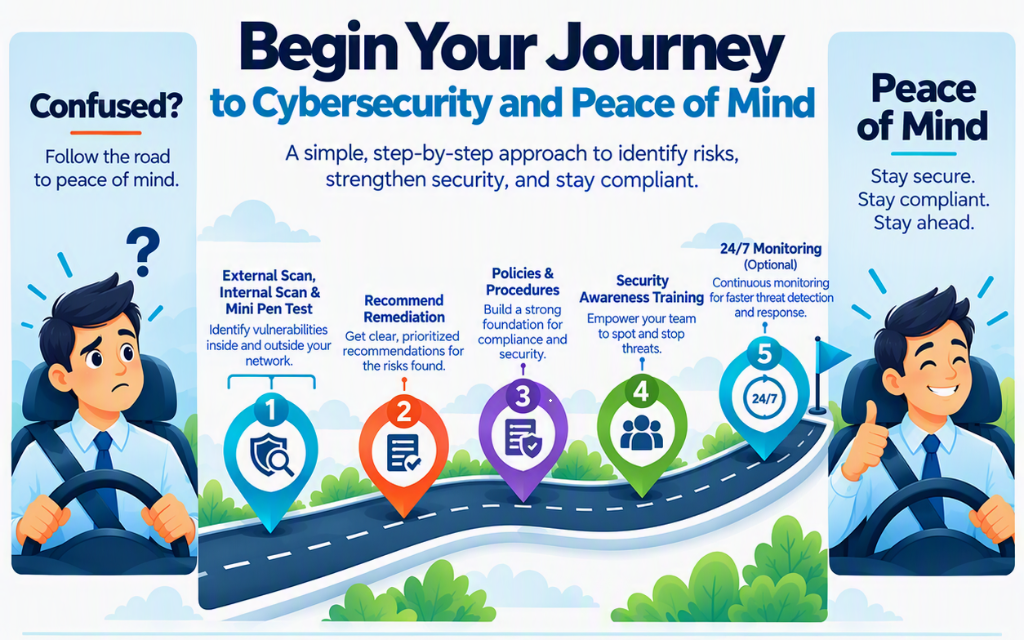
URS helps organizations understand their cybersecurity risks and provides recommendations for addressing identified weaknesses.
Technical remediation is performed by the organization's internal IT team or MSP.
Our focus is on cybersecurity compliance, risk identification, documentation, and helping organizations maintain a structured approach to their security responsibilities.
Final Thoughts: Cybersecurity Is a Continuous Journey
Cybersecurity Awareness Month provides an opportunity to reflect on the importance of protecting digital information.
But the real value comes from what happens after October.
Organizations should continue to identify risks, strengthen safeguards, educate employees, review compliance requirements, and prepare for incidents.
Individuals should continue protecting their accounts, securing their devices, and recognizing suspicious activity.
Cybersecurity is not about achieving perfection.
It is about understanding your risks, taking meaningful action, and continuously improving your ability to protect what matters.
A more cybersecure business begins with awareness—and grows through consistent action.
At Ultimate Risk Services, we help organizations take that next step
Ready to see where your company defenses stand?
👉 Request your customized cyber vulnerability report today and stay ahead of threats.
👉 Gain insights into your unique cybersecurity vulnerabilities with a custom report.
👉 Train your team to be your first line of defense
📞 Schedule a call today or 📧 contact us for a consultation.