

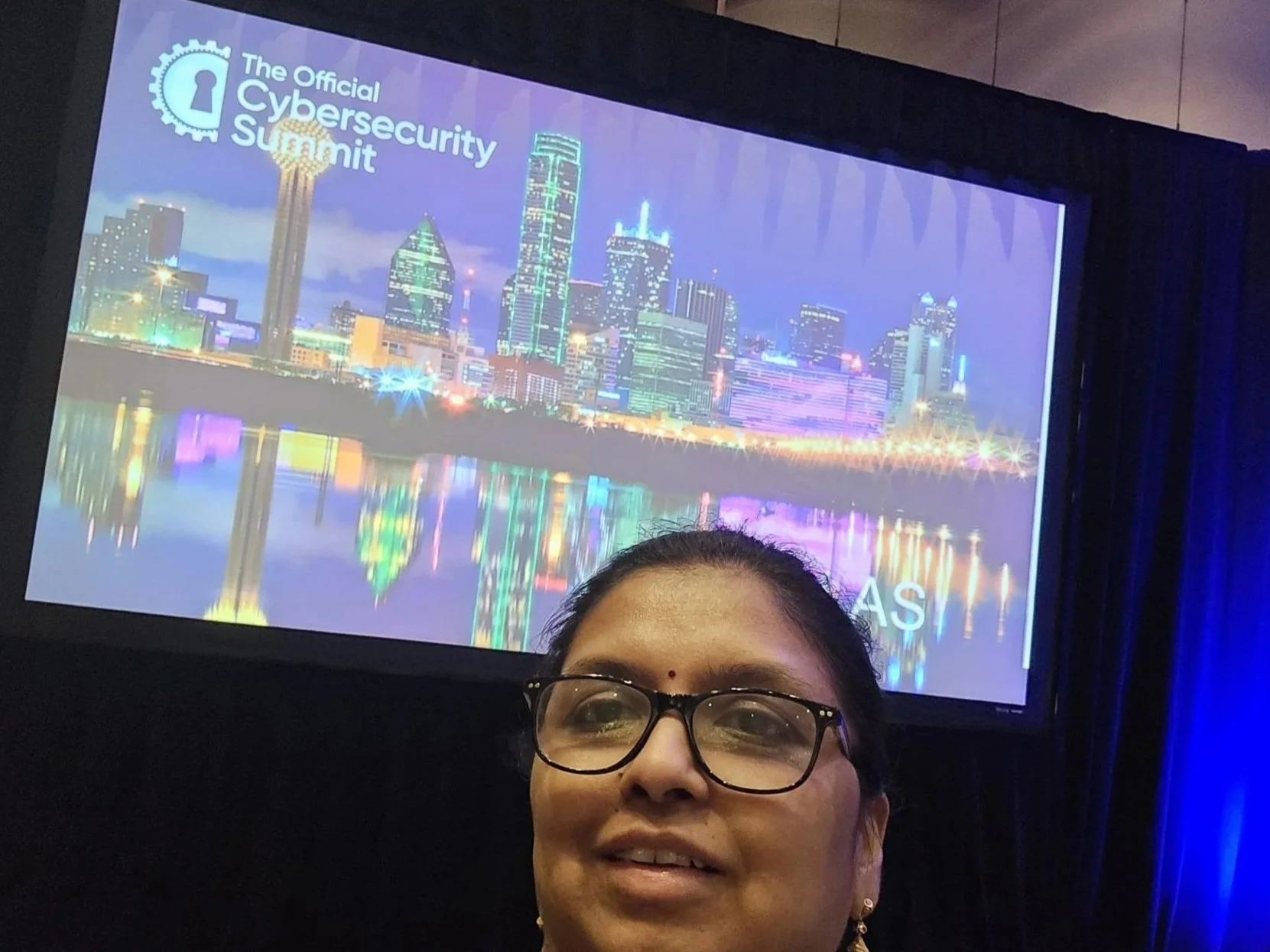
Spending a day at the Cybersecurity Summit in Dallas was like getting a tour through the most urgent realities of modern cyber defense. The venue was the Sheraton Dallas Hotel, but the conversations spanned everywhere from the cloud and APIs to AI threats and identity governance. Here’s what I took away from the sessions that mattered most.
1. Ransomware is thriving because people are predictable
Will Barker from Huntress reminded us that most successful breaches begin with social engineering. His story of a nonprofit targeted on Christmas Day through e‑signature phishing was a stark reminder that awareness programs still matter more than any single platform.
2. Forget zero‑days — focus on “digital debris”
John Shier of Sophos unveiled sobering data: it’s rarely brand‑new exploits that bring organizations down. Unpatched, end‑of‑life firewalls and gateways are among the biggest breach enablers. As he called it, “digital detritus” remains the lowest‑hanging fruit for adversaries.
3. APIs are the new control plane
Akamai’s Tony Lauro reframed how companies should think about APIs. If attackers control your APIs, they effectively control your business workflows. Internal APIs often bypass WAFs, leaving thousands of unseen connectors open to abuse.
4. Build the golden path for security
Paul Davis from JFrog encouraged creating standardized “golden paths” for software delivery — a secure, repeatable baseline that makes compliance automatic instead of reactive.
5. Prove resilience with evidence, not effort
Ellen Sunda of Horizon3.ai wants us to stop measuring effort (how many trainings or policies) and start measuring outcomes (how effectively defenses respond to real attack simulations).
6. Treat AI as a powerful but risky partner
Panelists Kisha Hymes (Cloudflare), Dr. Kenneth (Microsoft), and Thomas Reyes (Netskope) compared AI to a “smart assistant” that still needs rules and reviews. Governance isn’t a checklist — it’s a living strategy.
7. The dark side of AI: attackers use it, too
Scott Deluke from Abnormal Security demonstrated how generative AI lets attackers craft perfect phishing, automate reconnaissance, and mimic executives with alarming ease. AI enables both offense and defense at machine speed.
8. Identity is the new perimeter
Chris G. from Rubrik called identity providers “the crown jewels” of enterprise security. Protecting tokens, managing session validity, and monitoring lateral movement within IdPs is now critical.
Bringing it back to Ultimate Risk Services
For us, these talks reinforced our commitment to bridging two worlds: business practicality and real‑world cyber hygiene.
Our focus for 2026 will include:
Expanding awareness materials to highlight AI‑driven phishing trends.
Embedding lifecycle patching and API governance into policy frameworks.
Helping clients adopt AI governance that balances efficiency with oversight.
Emphasizing resilience metrics in third‑party testing outcomes.
At Ultimate Risk Services, we believe resilience is built on three pillars: policy clarity, proven controls, and educated people. The Dallas summit confirmed that this mindset is exactly what forward‑thinking security leaders are prioritizing.
Ready to see where your defenses stand?
👉 Request your customized cyber vulnerability report today and stay ahead of threats.
👉 Gain insights into your unique cybersecurity vulnerabilities with a custom report.
👉 Train your team to be your first line of defense
📞 Schedule a call today or 📧 contact us for a consultation.